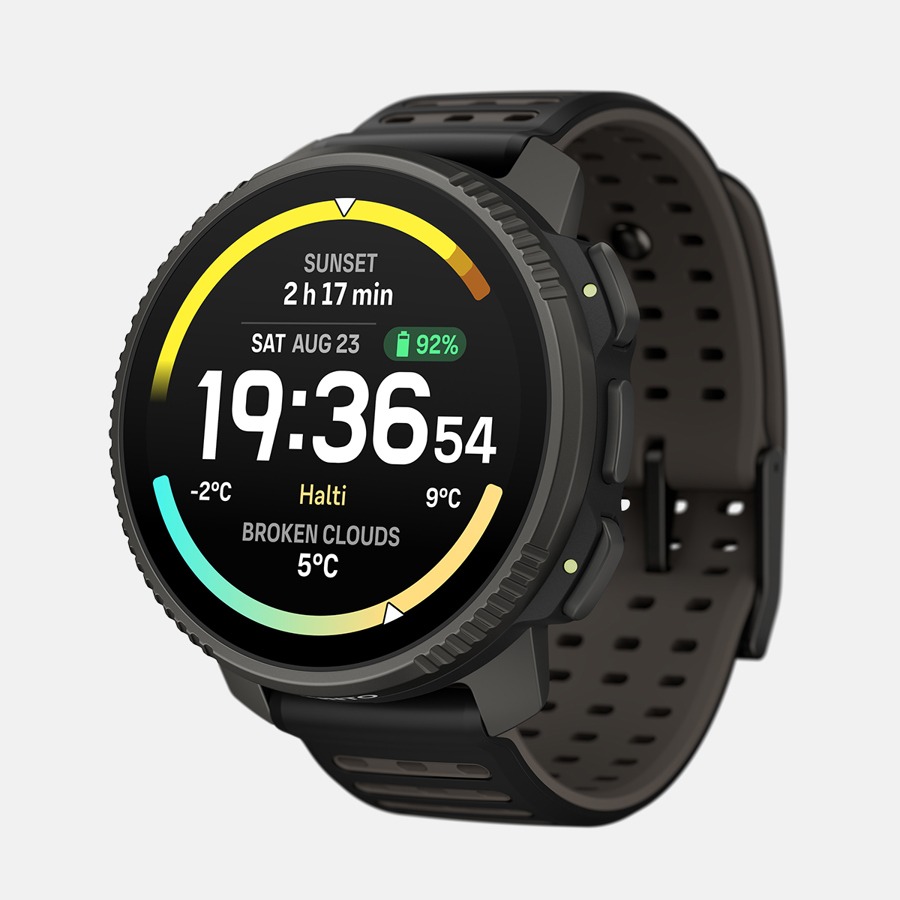
A long trail changes how you judge gear. A bright screen matters less when your hands are cold, your phone is buried, and the next junction is half hidden by switchbacks. The GPS watch people are watching closely right now is the Suunto Vertical Titanium, mostly because it feels built around the part of hiking that gets ugly: distance, weather, weak signal, and battery stress. For U.S. hikers reading outdoor gear coverage before spending premium money, the draw is clear. This is not a tiny phone replacement trying to act outdoorsy. It is a mountain-first tool with offline maps, dual-band GNSS, solar support on titanium solar models, and battery numbers that make weekend charging habits feel old. Suunto lists up to 85 hours of exercise tracking in its most accurate mode on the titanium solar version, plus offline maps and more than 115 sport modes. That does not make it perfect. It makes it worth a harder look.
Why the Suunto Vertical Titanium Feels Built for Bad Trail Days
The best hiking gear earns trust when the day stops being neat. Blue skies at the trailhead can turn into sideways rain above treeline. A simple four-mile loop can become a slow crawl when snow covers markers. That is where the Suunto Vertical Titanium starts making sense. Its appeal is not only the spec sheet. It is the way those specs match the mess of real hikes.
Titanium matters less for bragging and more for wearing it all day
Titanium sounds like a luxury word, but on a watch like this, it has a practical job. It keeps weight down while giving the case a harder, more trail-ready feel than a basic lifestyle wearable. That matters on a long climb because small annoyances grow teeth. A heavy watch can tug under a jacket cuff, rub against trekking pole straps, and make you aware of your wrist every mile.
The Suunto Vertical Titanium is still a big outdoor watch. No honest hiker should pretend it wears like a slim office smartwatch. The point is different. It is meant to sit on your wrist through sweat, grit, camp chores, and the awkward moment when you knock your arm against granite while scrambling up a slab in Colorado or New Hampshire.
The non-obvious part is that comfort is not only about grams. Button shape, strap tension, case edges, and glove use matter more once you are tired. A lighter case helps, but the bigger win is confidence. You stop babying it.
Battery confidence changes how you plan a route
Many hikers think battery life is about avoiding a dead screen. That is too small. Battery confidence changes your behavior before the hike starts. You are less likely to turn off tracking early. You are less likely to lower accuracy because you feel nervous. You are less likely to save the watch only for “the hard part,” which is usually when you already needed it.
That is where the Vertical line has teeth. Suunto says the titanium solar model can reach up to 85 hours of tracking in its most accurate mode, while the stainless steel version is rated lower in that same setting. For a U.S. hiker doing a Grand Canyon rim-to-rim, a long Smokies route, or a three-day Sierra trip, that difference is not a cute bonus. It shapes how much mental space charging takes up.
The counterintuitive lesson is simple: longer battery life can make you safer because you use the tool more normally. A short battery makes people ration navigation. A long battery lets the device do its job from mile one.
GPS Watch Navigation for Hikers Who Leave Cell Service Behind
Navigation is where this device earns its attention. Most hikers do not get lost because they are careless. They get turned around because trails split, tree cover blocks sky view, weather changes the view, or the route on the ground no longer looks like the route in the app. A watch cannot replace judgment. It can reduce doubt at the exact second doubt gets expensive.
Offline maps are boring until your phone loses signal
Offline maps do not sound exciting when you are sitting at home with Wi-Fi. They matter when your phone shows one bar, your map app stalls, and the trail sign has been chewed up by weather. Suunto includes outdoor offline maps on the Vertical, and that feature fits hiking better than many smartwatch extras. You can check the shape of the route without pulling out a phone every few minutes.
For American hikers, this is a huge deal in places like the Adirondacks, the Ozarks, the Rockies, and wide parts of Utah where cell coverage can drop fast. Even popular parks have dead zones. Popular does not mean connected.
Still, the smarter move is not blind trust. The National Park Service lists navigation as one of the Ten Essentials and says hikers should know how to use a map, compass, and GPS system before heading out. It also recommends bringing a physical map as backup. That advice should sit above every gadget review. A watch is a tool, not a rescue plan.
Dual-band GNSS helps most where trails get messy
Dual-band GNSS matters most in places where the sky is not clean. Think canyon walls, thick forest, tight valleys, or city-edge trail systems with rock faces and tree cover. In those settings, a basic signal can bounce or drift. That drift may not matter on a road run. On a faint trail, it can make you second-guess the next turn.
The Suunto Vertical Titanium uses dual-band GPS/GNSS, according to Suunto’s product page. That gives it stronger footing for hikers who care less about smartwatch tricks and more about staying honest on the route. It is not magic. Wet leaves, cliffs, and deep cover can still make any device work harder.
The useful insight is that better accuracy does not only help after you are lost. It helps before that. When the track feels stable, you stop wasting energy arguing with the map. On long hikes, saved attention is saved stamina.
Where the Watch Wins, and Where It Still Makes You Work
A strong outdoor watch can still annoy you. That is worth saying because premium gear often gets talked about like it removes all friction. It does not. The Suunto Vertical Titanium solves some real trail problems, but it also asks you to accept a few trade-offs. For the right hiker, those trade-offs are fair. For the wrong buyer, they may feel silly.
It favors hikers over smartwatch fans
This is not the device to buy because you want the richest phone-on-wrist experience. It makes more sense if your priority list starts with navigation, long battery life, durability, route tracking, and outdoor sport modes. Suunto says the Vertical supports more than 115 sport modes, but the heart of the watch is still outdoor movement. Hiking, trail running, mountaineering, ski touring, backpacking. That is the natural lane.
A hiker in Arizona doing exposed desert routes may care more about battery and readable maps than message replies. A weekend backpacker in Washington may care more about route confidence than app polish. That is the split. This watch is for people who would rather lose some smartwatch shine than lose outdoor focus.
There is also a buying wrinkle now. Suunto has newer Vertical 2 models with a 1.5-inch AMOLED display, offline maps, improved navigation, an integrated LED flashlight, and up to 65 hours of battery life. Suunto also explains that the original Vertical uses a 1.4-inch MIP display designed for outdoor readability and lower power use. So the older titanium solar version still has a clear identity: less flashy screen energy, more old-school endurance logic.
Solar support helps, but it is not a free charger
Solar charging sounds like the kind of feature that sells itself. Hikers picture endless daylight and a battery that refuses to die. The reality is more grounded. Solar helps most when the watch spends real time in strong sun, not under sleeves, gloves, tree cover, or rain shells. It adds margin. It does not erase planning.
That margin still matters. On a bright Utah hike, a titanium solar model may get more benefit than on a shaded Appalachian route. In winter, when the sun is low and sleeves cover the wrist, the gain may be smaller. This is where marketing language often gets ahead of trail life.
The counterintuitive take: solar is best when you do not depend on it. Treat it as a buffer, not a promise. Charge before the trip, download maps, check settings, and pack a small power bank for longer routes. Then let solar stretch the plan instead of carrying the plan.
For related planning, you could pair this with a long-distance hiking gear checklist and a trail safety planning guide before heading into areas where service drops.
How to Decide If It Belongs on Your Wrist
The Suunto Vertical Titanium is not cheap, small, or casual. That is why the decision should be practical. You are not buying a watch because hikers online like it. You are buying it because your routes, habits, and patience match what it does well.
Buy it for long routes, not short neighborhood loops
This watch makes the most sense for hikers who build days around distance, elevation, and uncertain conditions. If you hike local park loops, stay near service, and mainly want steps, sleep, and notifications, it may be too much. You can spend less and still get a fine fitness tracker.
But if your weekends involve national forest roads, trail junctions with poor signs, all-day climbs, or backpacking routes where a phone battery feels too precious, the Suunto Vertical Titanium starts to look less like a luxury and more like trip gear. Think of it beside boots, layers, a headlamp, and a water filter. It is not decoration. It has a job.
One real example: a hiker doing a two-night loop in the Wind River Range may not need a bright app store on the wrist. They need offline route awareness, steady tracking, and battery life that does not collapse after a long first day. Different problem. Different tool.
Check the ecosystem before you chase the hype
The watch is only part of the experience. You also need to like the app, the route planning flow, the buttons, the maps, and the way data appears after a hike. Some people bond with Suunto’s cleaner outdoor style. Others prefer the deeper training menus and broader smartwatch features from rivals.
That is why the best test is not reading one more praise-heavy post. It is asking how you hike. Do you plan routes in advance? Do you care about breadcrumb tracks? Do you wear gloves often? Do you want fewer distractions? Do you prefer a screen that behaves well in sun over one that looks richer indoors?
The non-obvious answer may be that the “best” watch is the one you will trust enough to learn before the trip. A high-end outdoor device can still fail you if you open the map feature for the first time at a foggy junction. Practice on boring trails first. Boring practice is underrated.
Conclusion
The Suunto Vertical Titanium has become popular for a reason that feels honest. It serves hikers who are tired of treating battery life, signal quality, and map access as side issues. On long routes, those side issues become the day. The watch is not the best fit for everyone, and the newer Vertical 2 gives buyers another path if they want an AMOLED screen, a flashlight, and updated navigation features. Still, the original titanium solar model keeps a strong case for hikers who value endurance and outdoor readability over extra polish. The GPS watch market is crowded, but this one stands out because it respects the slow, gritty parts of hiking. Buy it if your trails are long enough to expose weak gear. Skip it if your needs are light. Either way, choose the tool that makes you calmer when the map, weather, and miles stop behaving.
Frequently Asked Questions
Is the Suunto Vertical Titanium worth it for casual hikers?
It can be more watch than a casual hiker needs. If your hikes are short, marked, and close to cell service, a cheaper tracker may work fine. It makes more sense for longer trails, poor signal areas, backpacking, and hikers who want strong navigation on the wrist.
How long does the Suunto Vertical Titanium battery last on hikes?
Suunto lists up to 85 hours of exercise tracking in the most accurate mode for the titanium solar version. Real results depend on settings, sunlight, temperature, sensors, and map use. For most weekend hikers, the battery margin is one of its strongest reasons to buy.
Does the Suunto Vertical Titanium have offline maps?
Yes, it includes outdoor offline maps. That is one of its main trail features. You should still download what you need before leaving home and carry a backup map for remote routes, since no wrist device should be your only navigation plan.
Is the Suunto Vertical Titanium better than using a phone?
It is better for quick wrist checks, long tracking, and saving phone battery. A phone still gives a larger map view and easier typing. The strongest setup is often both: the watch for active navigation and the phone as a backup planning screen.
Can beginners use the Suunto Vertical Titanium?
Beginners can use it, but they should practice before a serious hike. Learn route loading, map viewing, battery modes, and backtracking on an easy local trail first. The watch becomes far more useful once the controls feel natural.
Is solar charging enough for backpacking trips?
Solar support can extend battery life, but it should not replace charging plans. Shade, sleeves, clouds, and cold weather can reduce benefit. For multi-day trips, start fully charged and bring backup power if the route is remote or weather looks uncertain.
How does the Suunto Vertical Titanium compare with the Vertical 2?
The Vertical 2 adds a brighter AMOLED display, improved navigation, an LED flashlight, and updated features. The original titanium solar model still appeals to hikers who prefer the MIP display style, solar support, and long outdoor endurance.
Who should avoid buying the Suunto Vertical Titanium?
Skip it if you mainly want music, payments, rich app support, or a small daily smartwatch. It is built around outdoor navigation and endurance. People who rarely hike beyond easy routes may not get enough value from its premium trail features.