A student can memorize a chapter, pass a quiz, and still have no idea why the sky turns orange at sunset or why a phone battery drains faster in the cold. That gap matters because science should not feel like a locked room with a test waiting inside. For American students juggling school, sports, jobs, screens, and college pressure, science learning tips work best when they turn abstract facts into something you can touch, question, test, and remember. The strongest learners do not treat science as a list of terms. They treat it like a way of noticing the world with sharper eyes. Schools, tutoring centers, libraries, and even local education platforms such as student-focused learning resources can support that shift when they point students toward practice instead of passive reading. Curiosity is not a cute extra. It is the engine. Once you learn how to ask better questions, study science better, and build steady science study habits, the subject stops feeling like a wall and starts acting more like a door.
Science Learning Tips That Start With Better Questions
Good science begins before the textbook opens. It starts in the small pause where you admit that something does not make sense yet. Curious students often think they need quick answers, but the stronger move is to slow the question down. A biology worksheet asks how plants make food, but a better student wonders why a plant near a window bends toward light. A physics class explains motion, but the sharper question asks why a skateboard slows faster on cracked pavement than on a gym floor.
How curious students turn confusion into a study tool
Confusion gets a bad reputation in school because it feels like failure. It is not. Confusion is often the first honest sign that your brain has found the edge of what it understands, and that edge is where learning starts to get useful.
A student in Ohio studying chemical reactions might read that vinegar and baking soda release carbon dioxide. That sentence is easy to copy into notes. The better move is to ask, “How would I know a gas formed if I could not see it?” That question pushes the lesson beyond vocabulary and into evidence.
Teachers notice this difference fast. The student who asks, “Will this be on the test?” is trying to survive the class. The student who asks, “Why does this happen this way and not another way?” is building a mind that can handle harder problems later.
Why “why” is stronger than “what” in science class
Facts matter, but isolated facts fade fast. A “what” question may help you name the parts of a cell, yet a “why” question helps you understand why those parts behave differently. That shift matters in middle school, high school, and college science courses across the United States.
A student learning about earthquakes may memorize fault lines and seismic waves. A stronger learner asks why some buildings survive shaking better than others. Suddenly, geology connects to engineering, city planning, California safety codes, and the real streets people drive on every day.
This kind of thinking also protects you from shallow confidence. Many students feel prepared because their notes look complete. Then a test question changes the wording, and the answer disappears. Questions build flexible understanding, and flexible understanding travels better than memorized lines.
Build Science Study Habits Around Real Practice
Once your questions improve, your routine has to catch up. Strong science study habits do not depend on long, dramatic study sessions the night before a test. They come from repeated contact with the material in different forms. Read it, sketch it, explain it, test it, and correct it. That cycle sounds simple, but most students skip at least half of it.
How to study science better without drowning in notes
Many students confuse note-taking with learning. They fill pages with neat definitions, highlight half a chapter, and feel productive because the paper looks busy. The problem is that science rewards recall, reasoning, and application, not decoration.
A better method is to close the book after a short section and write what you remember in plain speech. No perfect wording. No copying. A ninth grader in Texas learning Newton’s laws might write, “Objects keep doing what they are doing unless something changes their motion.” That sentence may not sound polished, but it shows ownership.
Then comes the part students love to avoid: checking. Compare your version with the textbook, mark what you missed, and fix the gap. This turns study time into a feedback loop instead of a copying session, and feedback is where the brain does its harder work.
Why short study sessions beat late-night panic
A long cram session can feel heroic, but it often leaves students tired and overconfident. Science needs spacing because ideas connect over time. You understand photosynthesis better after seeing it on Monday, testing yourself on Wednesday, and explaining it on Friday than you do after staring at it for three exhausted hours on Sunday night.
Short sessions also make room for mistakes. Ten minutes of practice problems after dinner can reveal that you do not understand density before the quiz exposes it. That early discomfort is a gift, even when it annoys you.
Busy American students need routines that survive real life. A student with basketball practice, family chores, and an after-school job may not have two quiet hours each night. Fifteen focused minutes with a clear task can beat an unfocused marathon, especially when those minutes happen often.
Hands-On Science Learning Makes Ideas Stick
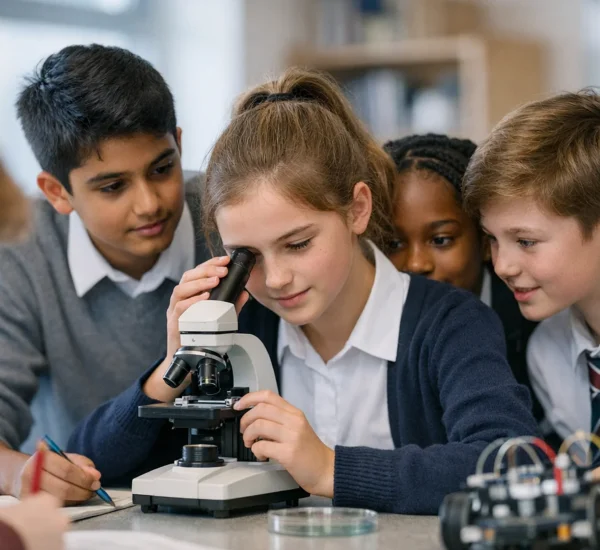
Reading explains science, but doing makes it personal. Hands-on science learning gives students a body memory for ideas that otherwise float around as terms. You can read about friction, or you can slide different shoes across a kitchen floor and feel the difference. You can read about insulation, or you can wrap ice cubes in different materials and watch which one melts last.
Simple home experiments that make lessons feel real
A strong experiment does not need a lab coat or expensive supplies. It needs a clear question, a fair test, and attention to what changes. Students can test how sunlight affects evaporation by placing equal amounts of water near a window and in a shaded spot. They can compare paper towel brands by measuring how much water each one absorbs.
The point is not to create a perfect lab. The point is to learn how evidence behaves. A student who runs a messy first test learns that science is not magic; it is careful correction. That lesson matters more than a polished worksheet.
Parents can help without turning the kitchen into a classroom. Ask what the student expects to happen before the test begins. Then ask what surprised them afterward. Those two questions teach prediction and reflection, which sit at the heart of hands-on science learning.
How labs teach patience better than lectures
Labs slow students down in a useful way. A lecture can move from hypothesis to result in minutes, but an experiment makes you wait, measure, adjust, and sometimes start over. That waiting builds patience, and patience is one of the least praised skills in science.
A student in a Florida chemistry class may expect a reaction to change color at once. When it does not, the first instinct is to assume something went wrong. The better instinct is to inspect the setup, check the amount used, and ask whether the expectation was wrong.
That moment teaches a lesson no slideshow can match. Science does not bend to your timeline. It asks you to pay attention long enough for the truth to show itself, and that habit helps far beyond the lab table.
Connect Science to the World You Already Know
Science becomes easier when it stops living only in school. The strongest students build bridges between class concepts and daily life. They notice condensation on a cold soda can, shadows changing across a sidewalk, the smell of rain after a dry week, or the way traffic waves form on a crowded highway. Those moments are not distractions from learning. They are invitations.
Why local examples help American students learn faster
Students remember ideas faster when examples feel close to home. A student in Arizona may understand heat transfer better by thinking about a parked car in July. A student in Minnesota may grasp states of matter by watching snow turn to slush near a salted road. A student in Louisiana may connect biology to wetlands, mosquitoes, and flood control.
Local examples also make science feel less like a distant subject created by strangers. The United States is full of science problems hiding in plain sight: wildfire smoke, hurricane tracking, water quality, food storage, public health, energy use, and weather alerts. When students connect lessons to those realities, the subject gains weight.
This does not mean every lesson needs drama. A simple grocery store can teach density, packaging, nutrition labels, refrigeration, and plant biology. The world is already full of examples; students need practice seeing them.
How science study habits grow outside school walls
A strong science learner does not switch curiosity off after the bell rings. The habit carries into small choices: reading a label, checking a source, asking how a claim was tested, or wondering why one phone charger heats more than another. That is where science becomes part of judgment.
Families can support this without turning every dinner into a quiz. Ask one evidence-based question during normal life. “How could we test which route to school is faster?” “Why does the basement feel cooler?” “What would prove that this cleaning product works better?” The goal is not to grill anyone. The goal is to make thinking visible.
Students who study science better outside school often perform better inside it because the concepts have more places to attach. A textbook definition becomes easier to remember when it connects to a lived moment, and lived moments make learning harder to fake.
Conclusion
Science rewards the student who stays awake to the world. Not the student who owns the prettiest binder. Not the student who copies the longest definition. The real progress comes from asking cleaner questions, practicing before panic sets in, testing ideas with your hands, and noticing how often science shows up in ordinary American life. Science learning tips matter because they move students from passive reading into active judgment. That shift can change grades, but it can also change confidence. A curious student who knows how to test an idea becomes harder to fool, quicker to adapt, and more willing to keep going when the first answer fails. Start with one small change this week: turn the next science assignment into a question you can explain, test, or connect to something you have seen. Curiosity grows when you give it work to do.
Frequently Asked Questions
What are the best science learning tips for middle school students?
Start with questions, not memorization. Middle school students learn faster when they explain ideas out loud, draw simple diagrams, and connect lessons to daily life. Short review sessions, small home experiments, and quick self-tests help science feel less intimidating.
How can curious students study science better at home?
Choose one concept, explain it without looking, then check what you missed. Add a real example from your house, yard, kitchen, or neighborhood. This turns home study into active thinking instead of silent rereading.
What science study habits help students remember more?
Frequent short practice works better than rare long sessions. Students remember more when they review old material, solve practice questions, correct mistakes, and explain ideas in their own words. The habit matters more than the length of one study session.
Why is hands-on science learning helpful for students?
Hands-on work makes abstract ideas easier to understand because students can observe change directly. Measuring, testing, and adjusting teach patience and evidence-based thinking. A simple experiment can make one concept stick better than pages of notes.
How can high school students improve science grades?
Focus on practice problems, lab reasoning, and error correction. High school science often tests application, so students need to explain why an answer works, not only remember terms. Reviewing mistakes after quizzes can raise performance faster than rereading chapters.
What are easy ways to make science more interesting?
Connect lessons to sports, weather, food, phones, health, cars, or local events. Science becomes more interesting when students see it working in places they already care about. Curiosity grows when the subject feels close rather than distant.
How often should students review science notes?
Review notes within a day, then again a few days later. Short spaced reviews help the brain keep ideas available. Students should rewrite weak points, test recall, and add examples instead of reading the same page repeatedly.
What should parents do to support science learning?
Ask calm, evidence-based questions and encourage small experiments. Parents do not need to know every answer. They help most by making curiosity normal, giving students room to test ideas, and praising effort that leads to clearer thinking.